
The Opening Scene: Where a Film Teaches Us How to Watch.
An editorial exploration of the opening scene: where a film teaches us how to watch, examining the craft, choices, and ideas that shape how audiences experience cinema.

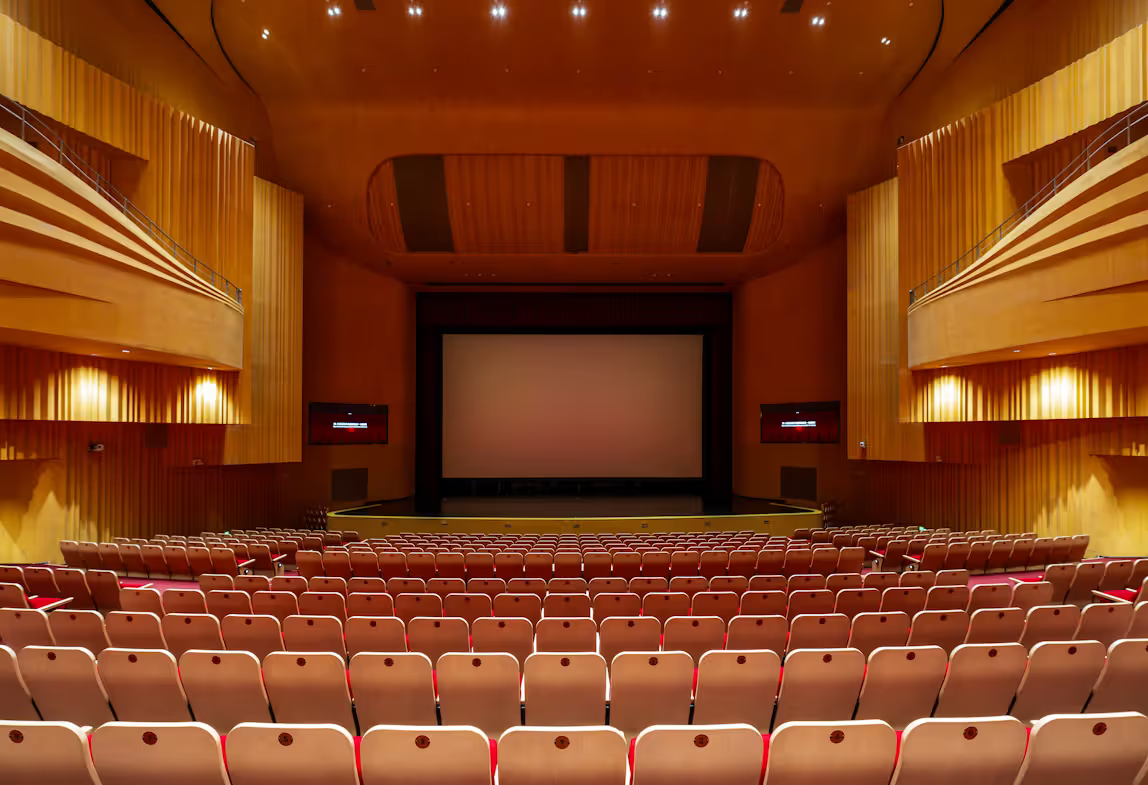
How the first moments of a movie establish its visual language, emotional temperature, and invitation to keep watching.
The Opening Scene: Where a Film Teaches Us How to Watch begins with a simple idea: cinema works not only because of what a film shows, but because of the choices that shape how an audience experiences it. For Storygrid, those choices are worth slowing down for.
Expectation
The subject becomes interesting when we stop treating opening frames as a background detail and examine the decisions that produce the audience’s response. In this part of the process, filmmakers are balancing intention with uncertainty, because a choice made on set can acquire a different meaning once it meets the finished film.
Visual promises
Visual promises is where craft becomes visible. A strong choice usually supports more than one purpose at once: it can establish character, control pace, reveal information, or create an emotional contrast. The most effective work rarely announces itself; it simply makes the scene feel inevitable.
The first minute
Cinema also depends on collaboration. Directors, writers, actors, cinematographers, editors, designers, composers, and many others interpret the same idea from different angles. The finished result is strongest when those interpretations reinforce one another without becoming mechanical.
A stronger beginning
The audience completes the process. Viewers bring memories, expectations, cultural references, and personal experiences to every scene. That is why a carefully constructed moment can feel intimate to one person, unsettling to another, and nostalgic to someone else.
The craft behind the feeling
Looking closely does not reduce the magic of a film. It often makes the experience richer because the audience begins to recognize how timing, composition, performance, sound, and narrative information work together. Storygrid treats that close attention as part of the pleasure of cinema.
What to notice
- Start with a question: look for the decision behind the effect, not just the effect itself.
- Reveal the world quickly: look for the decision behind the effect, not just the effect itself.
- Create visual tension: look for the decision behind the effect, not just the effect itself.
“Every frame asks the audience where to look, and every great film makes that choice feel natural.”
— Maya Bennett
The Storygrid perspective: The best films make craft feel invisible while leaving the audience with a feeling that is anything but. Looking closely reveals how many deliberate decisions are hiding inside that experience.

Maya Bennett
Film critic and senior editor exploring cinema, film criticism, visual storytelling, and the craft behind memorable movies.
Discussion
More stories to explore
What Good Film Criticism Actually Does
An editorial exploration of what good film criticism actually does, examining the craft, choices, and ideas that shape how audiences experience cinema.
 Sofia Laurent
Independent Cinema and the Art of Taking Risks
An editorial exploration of independent cinema and the art of taking risks, examining the craft, choices, and ideas that shape how audiences experience cinema.
 Elena Rossi
· Printed in pixels, with care.